What Are the 2026 Top Battery Charger Suppliers?

Time:2026-10-01 Author:Aria
0%

Choosing the 2026 top Battery Charger suppliers requires more than comparing advertised charging speed. Reliable evaluation should examine engineering quality, product consistency, safety documentation, and long-term support. A supplier may offer impressive laboratory results, yet perform differently in a hot warehouse or a cold service vehicle.

This guide will compare leading suppliers through practical criteria. These include charging efficiency, battery compatibility, thermal protection, output stability, repair access, warranty terms, and technical documentation. Evidence matters. Datasheets, independent test reports, installer feedback, and verified customer experience can reveal important differences. A durable charger should maintain stable performance during repeated daily cycles, not only during a short demonstration.

The review will consider suppliers serving consumer electronics, automotive, industrial, marine, and energy-storage applications. Their product ranges, manufacturing capabilities, quality controls, and support networks will also receive attention. Some companies publish detailed specifications, while others provide limited information. That gap deserves scrutiny.

Rankings are never permanent. Real use differs. Market conditions, component availability, and product updates may change supplier performance during 2026. Public information can also be incomplete, creating room for reasonable doubt. Therefore, this comparison should support informed research rather than replace technical verification. Buyers should confirm connector types, charging chemistry, voltage limits, environmental ratings, and service coverage before making a purchase. The strongest suppliers will be those that combine dependable hardware with transparent evidence and responsive expertise.
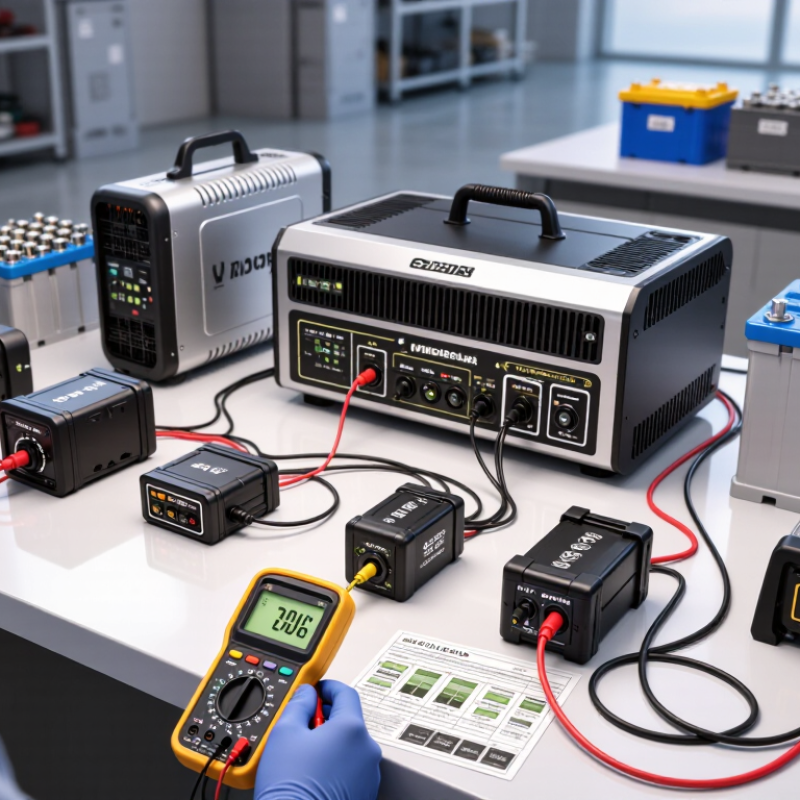
What Are the 2026 Top Battery Charger Suppliers?

Battery Charger Supplier Market Overview for 2026

The 2026 battery charger supplier market is becoming more specialized. Demand is rising for chargers used in electric mobility, energy storage, industrial equipment, and consumer devices. The strongest suppliers will not be judged by volume alone. Buyers will compare charging efficiency, thermal control, software support, and production consistency. A supplier with clear test records often deserves more attention than one offering the lowest quotation. In practice, procurement teams should request samples, factory process details, and failure-rate data before signing a long contract.

Numbers matter.

Suppliers serving light electric vehicles are investing in compact, weather-resistant chargers with communication functions. Industrial suppliers focus on high-power systems, modular service, and stable operation under continuous loads. Energy-storage charger suppliers are adding monitoring interfaces and safer fault protection. Meanwhile, contract manufacturers compete through flexible customization and shorter development cycles. Their advantage can be real, but quality may vary between pilot batches and mass production.

That gap needs checking.

For a reliable 2026 market assessment, buyers should review certifications required in target regions, warranty terms, spare-parts access, and technical response times. Engineers should test performance across temperature, voltage, and load changes. Supplier audits can reveal weak traceability, rushed inspections, or unclear subcontracting. Market rankings also remain imperfect because public data is limited and supplier claims are not always comparable. A practical shortlist combines verified evidence, field experience, and total ownership cost rather than advertising language.

Key Types of Battery Chargers and Their Applications

What Are the 2026 Top Battery Charger Suppliers?

Battery chargers are selected by battery chemistry, capacity, voltage, and operating environment. A charger that suits lithium-ion cells may damage a lead-acid battery. That difference is easy to overlook.

Linear chargers remain useful for small devices because they are simple and generate little electrical noise. However, they waste more energy as heat. Switching chargers offer better efficiency for laptops, tools, and portable equipment. Their cooling design still matters. A warm enclosure can shorten service life.

Smart chargers use controlled charging stages. They commonly include constant-current, constant-voltage, balancing, and automatic shutoff functions. These chargers support electric mobility, energy storage systems, and professional equipment. Charging profiles must match the battery manufacturer’s limits. Guesswork is risky.

Trickle chargers provide a low current for batteries that sit unused, such as seasonal vehicles. Maintenance chargers are related, but they usually monitor voltage and adjust output more actively. They are not identical. Not always.

Fast chargers reduce waiting time for phones, power tools, and electric vehicles. Higher power increases heat, cable requirements, and thermal management demands. A compact USB-C charger may serve several devices, while a high-power industrial unit needs stronger protection and ventilation. Wireless chargers improve convenience, but alignment losses can reduce efficiency.

Supplier quality involves more than advertised wattage. Examine testing records, temperature control, protection circuits, connector durability, and technical support. Independent verification is valuable, yet certification labels should be checked carefully. Some specifications appear impressive but lack real operating conditions. A better evaluation measures performance during repeated charging cycles, not only during a brief demonstration.

Criteria for Evaluating Top Battery Charger Suppliers

What Are the 2026 Top Battery Charger Suppliers?

Evaluating top battery charger suppliers requires more than comparing prices. Product safety, charging accuracy, and long-term stability should guide the decision. Experienced buyers examine test records, failure rates, and thermal performance under repeated use. A reliable supplier can explain how its chargers protect against overheating, overcharging, and voltage changes. Clear technical documents also reveal professional competence. Look for verified certifications, traceable components, and consistent production controls.

Compatibility matters greatly. The charger should match the battery chemistry, voltage range, capacity, and intended environment. A workshop charger may need dust resistance and strong cable strain relief. A compact consumer unit may need quiet operation and efficient heat control. Ask about warranty coverage, replacement procedures, firmware support, and response times. Real customer feedback helps, but it can be incomplete. No supplier is perfect. That deserves careful thought.

Tips: Request independent test reports before ordering. Compare warranty terms, not only headline prices. Check charging performance after several cycles, not just during a first-use demonstration. Ask for sample units when possible. Record surface temperature, charging time, and error behavior. Small details matter. A supplier that answers technical questions clearly often provides stronger after-sales support. Still, claims should be verified through documents and practical testing. Content teams should also review supplier updates regularly, because battery standards, cell designs, and operating requirements can change.

What Are the 2026 Top Battery Charger Suppliers? - Criteria for Evaluating Top Battery Charger Suppliers
Standards-based evaluation matrix for comparing supplier capabilities across industrial, mobility, energy-storage, and specialty battery-charging applications.
Evaluation Dimension Top-Tier Benchmark for 2026 Relevant Charger or Supplier Capability Recommended Verification Evidence Suggested Weight
Safety Compliance Documented conformity with applicable electrical and product-safety requirements Protection against overvoltage, overcurrent, short circuit, overheating, reverse polarity, and abnormal charging conditions Valid test reports, declarations of conformity, technical files, and certification records against applicable national or international standards 15%
Applicable Standards Coverage of standards relevant to the target market and battery chemistry IEC 60335-2-29 IEC 61851 IEC 60529 ISO 9001 Current certificates, laboratory reports, product manuals, and market-specific compliance documentation 10%
Battery Chemistry Support Validated charging profiles for the chemistries specified by the buyer Separate algorithms for lead-acid, lithium-ion, lithium iron phosphate, nickel-metal hydride, and other supported chemistries Charging curves, battery compatibility lists, engineering validation reports, and approved battery-management-system interfaces 10%
Charging Accuracy Stable voltage and current regulation throughout the charging cycle Controlled constant-current, constant-voltage, multi-stage, float, equalization, or temperature-compensated charging modes as required Independent performance-test data at minimum, nominal, and maximum input and load conditions 10%
Energy Efficiency Published efficiency data across representative operating loads, not only at rated output High conversion efficiency, low standby consumption, and reduced thermal losses Efficiency curves, no-load consumption results, thermal test records, and independently witnessed measurements 10%
Power Range and Scalability A product range covering the buyer’s required voltage, current, and power levels Options for low-power portable chargers, industrial chargers, rack-mounted systems, and high-power DC charging equipment Published product range, configurable output specifications, parallel-operation limits, and system expansion documentation 8%
Thermal and Environmental Performance Reliable operation under the temperature, humidity, dust, vibration, and installation conditions specified by the project Effective cooling, derating control, corrosion resistance, ingress protection, and stable performance in outdoor or industrial environments Operating-temperature range, derating curves, IP test results, vibration reports, and enclosure specifications 8%
Control and Communication Interoperability with the customer’s monitoring, automation, and battery-management systems Support for CAN, RS-485, Modbus, Ethernet, digital inputs, analog signals, alarms, and remote configuration where required Communication protocol documents, software-development kits, register maps, cybersecurity procedures, and integration test results 8%
Reliability and Service Life Documented reliability targets supported by production and field data Robust component selection, controlled manufacturing, fault logging, preventive maintenance guidance, and long-term parts availability Mean-time-between-failure methodology, warranty terms, failure-rate reports, corrective-action records, and service-life estimates 8%
Manufacturing Quality Repeatable production supported by a formal quality-management system Incoming inspection, automated testing, traceability, calibration control, end-of-line testing, and documented change management Quality certificates, factory-audit reports, process-control plans, sample inspection records, and batch traceability procedures 6%
Customization Capability Ability to adapt electrical, mechanical, software, and communication specifications without compromising compliance Custom connectors, enclosure designs, charging curves, firmware functions, output configurations, and mounting arrangements Engineering-change process, customization lead times, prototype records, design-responsibility matrix, and non-recurring engineering terms 5%
Supply Continuity Documented capacity and risk controls for multi-year supply Multiple qualified component sources, production capacity planning, inventory policies, geographic redundancy, and end-of-life management Capacity statements, supplier-risk assessments, lead-time history, business-continuity plans, and product-change notifications 5%
Technical Support Responsive pre-sales and post-sales engineering support in the target region Application engineering, commissioning assistance, troubleshooting, firmware support, training, and replacement-unit procedures Support-service-level agreement, escalation process, regional service coverage, response-time records, and training materials 3%
Total Cost of Ownership Competitive lifecycle cost rather than the lowest initial purchase price Purchase cost balanced against energy losses, maintenance, downtime, replacement parts, installation, software, and disposal costs Five- to ten-year cost model, warranty exclusions, maintenance schedule, spare-parts pricing, and energy-consumption assumptions 2%

Leading Supplier Capabilities, Technologies, and Product Ranges

In 2026, leading battery charger suppliers will compete through capability, not catalogue size. The International Energy Agency reported more than 17 million electric cars sold globally in 2024. Its Global EV Outlook 2025 also recorded over five million public charging points worldwide. This growth raises demand for reliable chargers across passenger vehicles, fleets, warehouses, and backup systems.

Strong suppliers offer compact home chargers, high-output depot units, portable service chargers, and industrial battery systems. Their platforms should support lithium-ion, lithium iron phosphate, and older lead-acid chemistries. Adaptive charging matters. It adjusts current when temperatures rise or battery resistance changes. Some suppliers now combine thermal sensors, cloud diagnostics, CAN communication, and load balancing. Details matter here. A charger that displays fault codes clearly can reduce workshop downtime.

Safety evidence separates serious suppliers from cheap substitutes. Buyers should examine independent testing, ingress protection, thermal performance, warranty terms, and replacement-part access. International standards such as IEC 61851 and IEC 60335-2-29 provide useful reference points, although compliance alone cannot prove field reliability. The U.S. Department of Energy continues to emphasize efficiency and interoperability in charging research. Supplier claims still require practical verification. A perfect laboratory result may not survive dust, cable abuse, or unstable power. That is the uncomfortable gap.

How to Select a Suitable Battery Charger Supplier in 2026

Choosing a suitable battery charger supplier in 2026 requires more than comparing online prices. Match the charger with the battery chemistry, rated voltage, capacity, and charging profile. A lithium battery may require precise constant-current and constant-voltage control. Lead-acid systems need different voltage limits and maintenance behavior. Ask suppliers for test reports, protection details, thermal data, and production traceability.

Look closely at practical performance. Can the supplier maintain stable output during voltage changes? Does the charger include overcurrent, short-circuit, overtemperature, and reverse-polarity protection? Request samples before placing a large order. Test them with your actual battery packs, cables, connectors, and enclosure. Small compatibility problems often appear only after several charging cycles. They are expensive surprises.

Supplier experience also matters. Review engineering qualifications, quality procedures, warranty terms, repair support, and documented delivery records. A dependable supplier should explain failures honestly, not hide behind vague guarantees. Check whether the company can support firmware updates, custom settings, and future capacity changes. A low unit price still tempts buyers. I have seen projects lose time because replacement parts were unavailable. Strong documentation is valuable. Still, no evaluation is perfect. Recheck assumptions with field data, especially when chargers operate in dusty workshops, cold warehouses, or high-temperature cabinets.

FAQS

What matters most when comparing battery charger suppliers in 2026?

Compare efficiency, thermal control, software support, and production consistency. The lowest price is not always the safest choice. Review test records carefully.

How should a charger match the battery?

Check battery chemistry, rated voltage, capacity, and charging profile. Lithium batteries often need precise constant-current and constant-voltage control. Lead-acid systems use different voltage limits and maintenance behavior.

Should buyers request samples before placing large orders?

Yes. Test samples with actual battery packs, cables, connectors, and enclosures. Run several charging cycles. Small compatibility problems can become expensive surprises.

Which safety protections should a charger include?

Look for overcurrent, short-circuit, overtemperature, and reverse-polarity protection. Ask for thermal data and fault-response details. Protection claims still need practical testing.

How can buyers evaluate supplier quality?

Request factory process details, failure-rate data, and production traceability. Review inspection records and subcontracting arrangements. A factory audit may reveal rushed checks or missing records.

What should engineers test during charger evaluation?

Test charging performance across temperature, voltage, and load changes. Use conditions from real sites, such as dusty workshops or cold warehouses. Laboratory results may not predict every field problem.

Why do warranty and repair support matter?

Check warranty length, spare-parts access, repair procedures, and technical response times. Ask whether firmware updates and custom settings are supported. A cheap replacement may still arrive too late.

Are flexible contract manufacturers always a good choice?

Not always. They may offer customization and shorter development cycles. However, pilot-batch quality can differ from mass production. Compare both stages before signing a long contract.

How reliable are public supplier rankings?

Rankings can help, but public data is often limited. Supplier claims may use different testing methods. A shortlist can still be wrong. Combine verified evidence, field experience, and ownership cost.

Conclusion

The 2026 battery charger supplier market is expected to focus on efficiency, safety, adaptability, and support for increasingly diverse energy systems. Battery Charger solutions will serve applications ranging from consumer electronics and electric mobility to industrial equipment, renewable energy storage, medical devices, and backup power systems. Major charger types will include standard AC chargers, fast chargers, smart chargers, modular industrial units, and specialized systems designed for different battery chemistries and operating conditions.

When evaluating suppliers, buyers should consider charging performance, energy efficiency, thermal management, protection features, certification, customization capabilities, production capacity, quality control, and after-sales service. Leading suppliers are likely to differentiate themselves through intelligent monitoring, connected functions, compact designs, scalable product ranges, and compatibility with evolving battery technologies. In 2026, selecting a suitable supplier will require matching technical specifications, safety requirements, budget, delivery expectations, lifecycle support, and future expansion plans with the supplier’s proven capabilities and overall reliability.

Aria

Aria

Aria is a dedicated marketing professional with a deep passion for innovative strategies and a keen understanding of our company's product offerings. With a wealth of experience in the industry, Aria excels at crafting engaging content that highlights the unique features and benefits of our......